
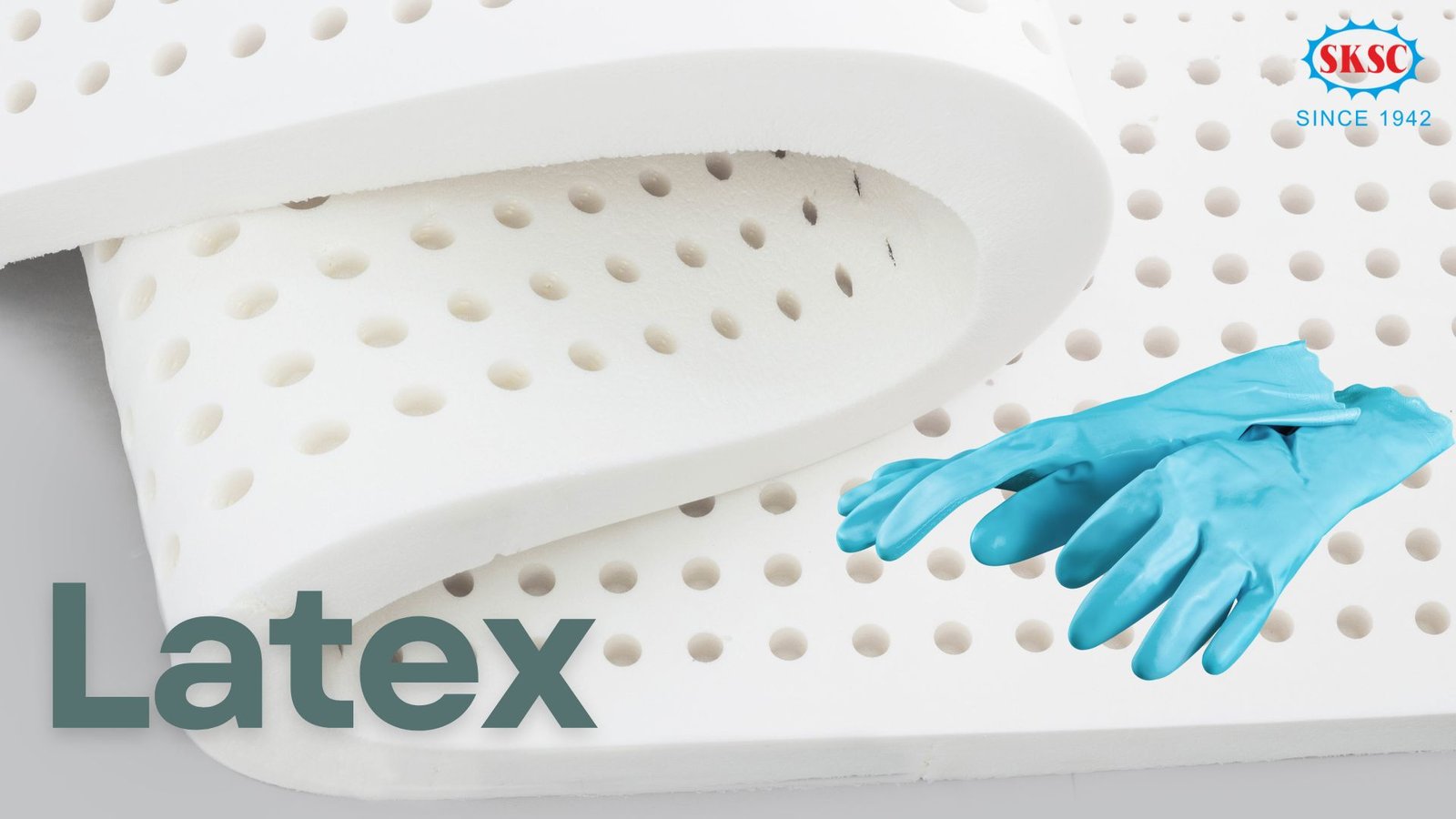
Latex Manufacturing
In conjunction with sulfuric acid and water, industrial salt causes latex to coagulate, thus separating rubber from latex to form neoprene and white rubber. Findings from time-resolved light scattering assessments conducted in aqueous EAN solutions indicated that the clumping of uncoated and polymer-functionalized latex particles is influenced by electrostatic interactions in diluted latex salt samples, where dissociated and hydrated ions exist. The aggregation of particles decelerates at elevated IL concentrations due to the medium's increased viscosity. Additionally, the particles exhibited significant stability in pure salt environments, where only minimal water was present. Under these experimental circumstances, no notable alteration in particle movement was observed when an electric field was applied during electrophoretic experiments. This suggests that the primary mechanism of colloidal stability in salt water for these systems is not electrostatic, as seen in diluted IL solutions; instead, the dispersions maintain stability primarily due to repulsive oscillatory forces arising from the layered arrangement of IL components on the particle surface and the sodium chloride or salt matrix. These findings illuminate the underlying interparticle forces that contribute to the colloidal stability of particles in both pure ILs and their aqueous solutions. The initial phase in the creation of latex gloves entails harvesting latex, a milky substance sourced from rubber trees. To guarantee a steady supply of latex and consistent sodium traces, trees are typically grown in rubber plantations. Once the trees reach maturity, workers make an angled incision in the trunk to enable the latex to flow into collecting containers. Chemicals, such as ammonium hydroxide or formic acid, may be introduced to promote coagulation and enhance the quality of the latex. During production, latex is applied to a former or mold to shape the gloves. Coagulants, which include substances like calcium nitrate, sodium, or synthetic agents such as polystyrene, assist in the solidification of the latex and its adherence to the mold. Release agents like calcium stearate or cornstarch are utilized to prevent the gloves from sticking to the mold, thereby facilitating the easy removal of the finished gloves. The manufacturing of latex gloves involves an array of chemicals that influence the final product's quality, strength, salt content, and durability. From latex extraction through vulcanization, the careful selection and application of these chemicals ensure that the manufacturing process produces gloves that conform to essential safety and performance standards. It is crucial to highlight that strict quality control protocols are established to safeguard the gloves' safety and reduce any potential risks linked to the chemicals employed.
S.K.S.C.NADARAJAN & BROR.
Salt company since 1942
Tuticorin Salt | crystal salt | crushed salt | relish freeflow salt | fine salt | coarse salt | size salt | Salt supplier | Kerala salt supplier | South indian salt export | South India salt company | thoothukudi saltern and refinery | Tuticorin saltern | deicing salt exporter | deicing salt tuticorin | Thoothukudi salt exporter | Thoothukudi traditional salt | Sea salt tuticorin | Sea salt refinery Thoothukudi | Thoothukudi salt refinery | India salt exporter tuticorin | salt Thoothukudi India | SKSC salt refinery Tamil nadu | India old salt company | Salt company and refinery India | Salt company tamil nadu | Salt company Tuticorin | Tamil nadu Salt refinery | India Salt | powder salt | natural salt india | Best salt company in south india | Salt seller Tuticorin | Salt seller in tamil nadu thoothukudi | retail table salt | common salt manufacturer | desalination salt | Salt