
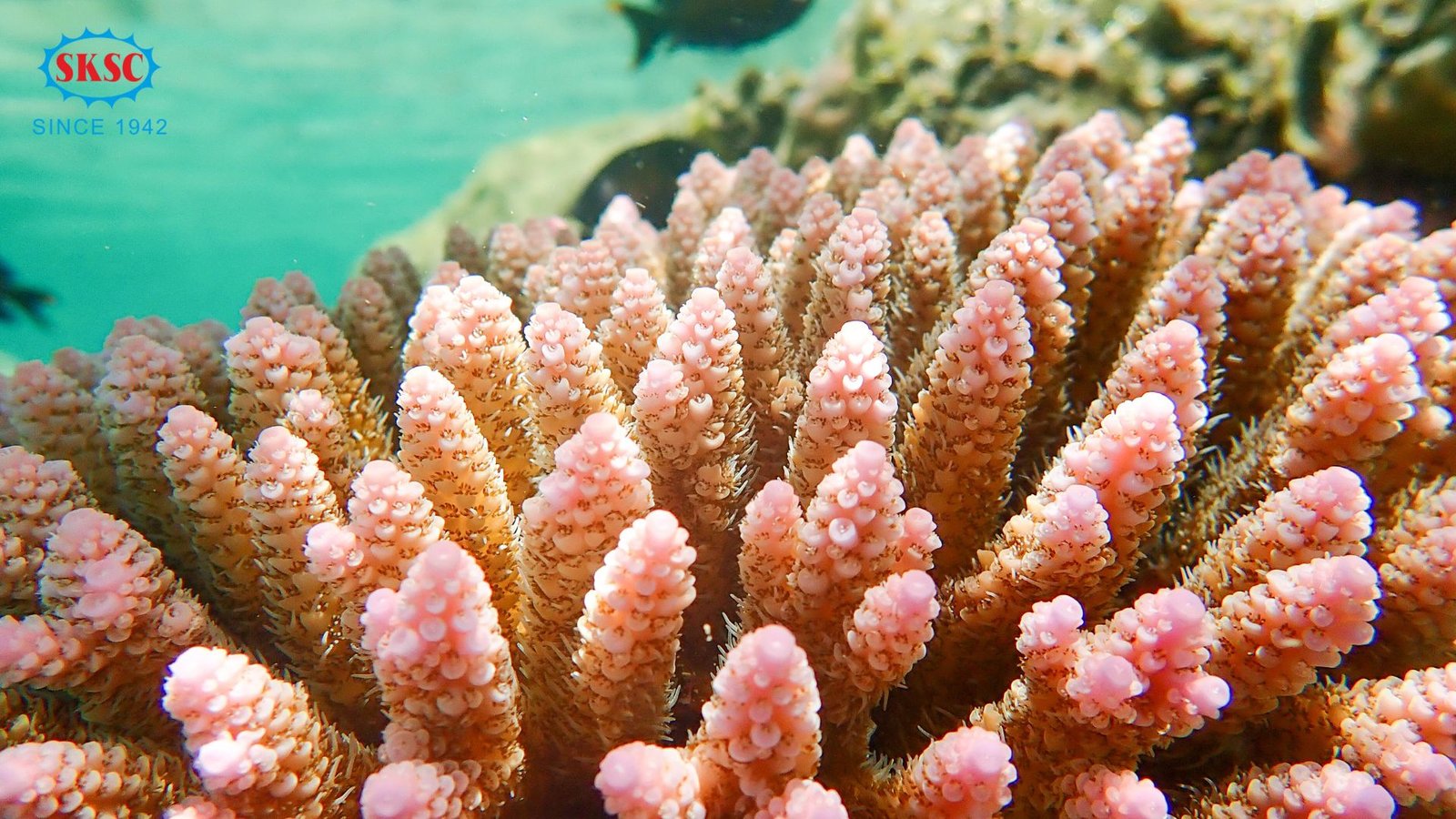
Life of Corals
Corals are enigmatic creatures that have existed for a long time. They are responsible for the creation of stunning reefs. Unfortunately, the reefs we admire are at risk of overheating and are vanishing from our earth. While this situation is concerning, not all corals react similarly to elevated seawater temperatures. Corals found in the Red Sea appear to be more resilient to higher temperatures compared to those from other areas. Red Sea reefs are flourishing in waters that are warmer than those in various locations. But what is their secret? What enables Red Sea corals to be more robust and heat-resistant? We understand that Red Sea corals not only withstand extremely high temperatures but also endure high salinity (salt concentration). Corals in the Red Sea must cope with elevated temperatures, yet they seem to thrive and perform well. The Red Sea is significantly warmer than other oceans. In that region, summer temperatures can soar to 34°C, whereas other ocean waters typically rise to about 29–32°C. Interestingly, corals in the Red Sea are not just surviving in warmer temperatures; they are also in waters with higher salinity levels. Salinity refers to the concentration of salt in water, such as in seawater. Various regions of the ocean present different salinity levels, and the Red Sea boasts some of the highest salt concentrations. Salinity is an indicator of how much salt is present in the water, and the Red Sea ranks among the highest in global salt levels. This led us to ponder whether salinity could be a crucial factor and if the ability to thrive in high salinity is one of the secrets behind the strength of the Red Sea corals. To explore this and other inquiries about coral bleaching, researchers frequently use a coral model organism, which is a species that is easier to study than corals yet closely resembles them. Anemones and corals inhabit various salinities, but they do not rupture when salinity fluctuates. For instance, even if we transfer an anemone from high salinity to low salinity during our experiment, it will not burst like cherries do. Why is this? It is because corals and anemones maintain similar salinity levels inside their cells as in the surrounding seawater. Both corals and anemones produce and break down molecules known as osmolytes, which are essential for adjusting to salinity. These molecules are synthesized or degraded to help minimize the salt gradient between the inside of a cell and the external environment, allowing them to regulate their internal conditions to match the seawater. Consequently, when there is no difference in salinity, no water movement occurs.
S.K.S.C.NADARAJAN & BROR.
Salt company since 1942
Tuticorin Salt | crystal salt | crushed salt | relish freeflow salt | fine salt | coarse salt | size salt | Salt supplier | Kerala salt supplier | South indian salt export | South India salt company | thoothukudi saltern and refinery | Tuticorin saltern | deicing salt exporter | deicing salt tuticorin | Thoothukudi salt exporter | Thoothukudi traditional salt | Sea salt tuticorin | Sea salt refinery Thoothukudi | Thoothukudi salt refinery | India salt exporter tuticorin | salt Thoothukudi India | SKSC salt refinery Tamil nadu | India old salt company | Salt company and refinery India | Salt company tamil nadu | Salt company Tuticorin | Tamil nadu Salt refinery | India Salt | powder salt | natural salt india | Best salt company in south india | Salt seller Tuticorin | Salt seller in tamil nadu thoothukudi | retail table salt | common salt manufacturer | desalination salt | Salt for soap industry | Salt for dye industry | Salt for water softening | Salt for spice and masala industry | Iodised Salt | Iodized common Salt | Crystal edible salt | salt for water softening | soil health | Gypsum | Plaster of Paris | Salt allied chemicals | Salt based fertilizer | Fine salt | thoothukudi uppu | negative energy cleanser